Tankless units are sophisticated machines, and that is both their strength and their weak spot. Instead of keeping forty or fifty gallons hot around the clock, a tankless heater springs into action only when water starts moving: a flow sensor detects demand, the control board fires the burner or elements, and water is heated on its way through the heat exchanger. Every step is watched by a sensor, and if any reading drifts outside its expected range, the board shuts the heater off and displays a code. For Erie, PA homeowners, that usually traces back to a short list of causes: scale building up inside the heat exchanger, a sticking or dirty flow sensor, an ignition problem at the igniter or flame rod, or a venting or gas supply issue the unit reads as unsafe.
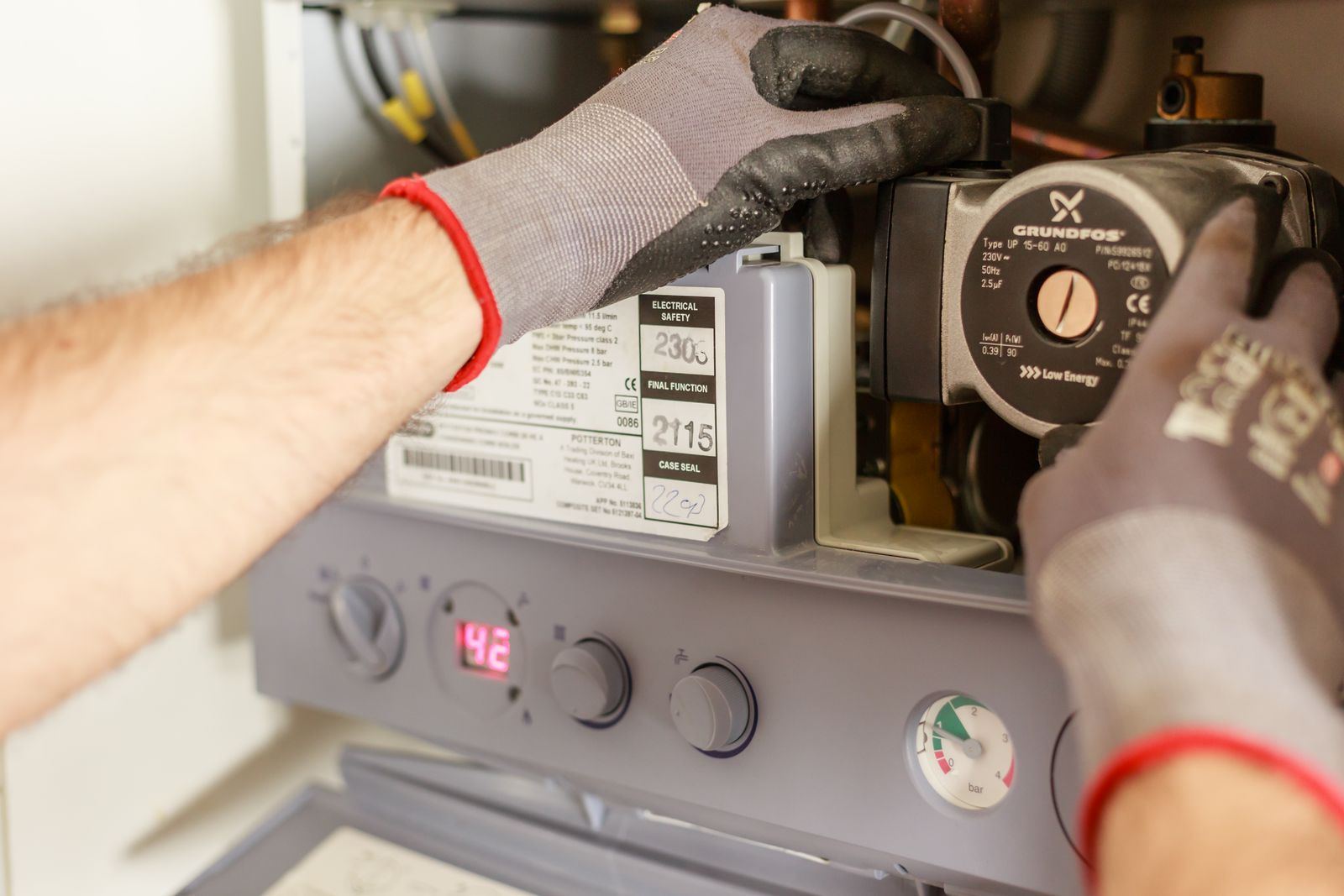
Erie Water Heater starts every tankless repair by reading the unit, not guessing at it. On every service call in Erie, we pull the active error code and the stored fault history, then test the components that code points to: flow sensor output while a faucet runs, flame rod signal in microamps, igniter resistance, inlet gas pressure both static and at full fire, and vent condition from the unit to the termination. Scale gets checked by comparing inlet and outlet temperatures against flow rate, since a heat exchanger that cannot transfer heat gives itself away in those numbers. A code tells us where to look, not what to replace. An ignition code, for example, can come from a worn igniter, a dirty flame rod, low gas pressure, or a blocked intake, and each one calls for a different fix.
We work on tankless heaters from Rinnai, Navien, Noritz, Rheem, Takagi, and the other major brands, gas-fired and electric alike. The fix depends on the diagnosis: a full descaling flush through the isolation valves when scale is choking the heat exchanger, a new flow sensor when the unit no longer notices a faucet opening, a fresh igniter or cleaned flame rod when ignition keeps failing, or a vent correction when the unit trips on combustion air. Sometimes the answer is bigger. A gas line undersized for the unit's full firing rate has to be upsized, and a heat exchanger cracked by years of scale may make replacement the smarter call on an older unit. We lay out every option honestly before any money is spent. Call (814) 200-8416 and a technician will be on the way.
Most of our service calls are for Water Heater Repair in Erie. Start there if you're not sure what you need.
When to Call for Tankless Water Heater Repair
Most tanks announce trouble weeks or months ahead with rumbling noises, rusty water, or hot showers that keep getting shorter. Watch for these telltale signs that professional help is needed:
- Moisture, rust, or drips appearing below the heater
- Temperature dropping sharply when a second shower or the dishwasher starts
- Longer bursts of cold water between hot draws than you used to get
- A fault code on the front panel and no hot water
- Repeated ignition attempts, then a shutdown
- A heater that only fires when water runs at full blast
- Hot water that fluctuates even though nobody touched the faucet
- A combustion fan that sounds louder or rougher than normal
Small Symptoms, Big Consequences
Tanks rarely fail all at once. They corrode from the inside for months, and the warning signs show up long before the floor gets wet. A quick call to (814) 200-8416 gets a technician out to check it before it becomes an emergency.
Need Help With Tankless Water Heater Repair?
One call gets a technician scheduled and a clear price before any work starts.
Tap to Call (814) 200-8416What Homeowners Ask Us Most
The Benefits of Professional Tankless Water Heater Repair
Start with what is at stake. A gas-fired tankless heater can burn nearly 200,000 BTU per hour at full fire, and its vent is the only thing carrying carbon monoxide out of the house; a joint that pulls loose or an intake that gets blocked changes that in a hurry. Electric tankless models are serious electrical loads, frequently more than 100 amps spread over several 240-volt circuits. Then there is the diagnostic puzzle. Error codes point to a system, not a part, so a flow sensor fault, a scaled heat exchanger, and a bad thermistor can look nearly identical on the display, and guessing gets expensive.
A trained technician with the right instruments gets to the answer faster. Ours read the fault history, measure flame signal and igniter resistance, test flow sensor output, and check gas pressure under full load with a manometer, which is the only reliable way to catch a gas line that holds pressure at idle but sags when the burner ramps up. We descale with a circulating pump and the right solution, then flush thoroughly so nothing corrosive is left in your plumbing. Just as important, you get an honest opinion: if the heat exchanger is damaged on an older unit, you will hear it from us before you spend money on a repair.
What to Expect From Our Team
Every visit follows a step-by-step method built around testing first and replacing parts only when the readings call for it. Here's exactly how a typical visit unfolds:
Code & Fault History Review
A code points us in a direction, and testing finishes the job. Flow sensor output, flame signal, igniter resistance, inlet gas pressure, and vent condition all get checked before any part comes out of the box.
Honest Answers & Upfront Price
You see what failed and hear why, then get a firm price before work begins. If scale has cracked the heat exchanger or the unit is near the end of its life, we say so plainly.
Targeted Repair
One trip is usually all it takes: a descaling flush, a new flow sensor, igniter, or flame rod, a cleaned inlet screen, or a corrected vent connection.
Tested Under Load
We never assume a fix worked. We test the unit at low flow and at full demand, confirm a steady outlet temperature, and verify that the code is cleared and does not return.
Want a Professional Opinion?
Tell us the age, fuel type, and symptoms, and we'll help you sort out the next step.
Call (814) 200-8416 NowTips to Keep Your Water Heater Healthy
Routine maintenance is almost always cheaper and easier than an early replacement. Start with these practical measures our team relies on:
- Keep the unit powered during freezing weather so its freeze protection can work
- Check the inlet filter screen periodically, since a clogged one starves the unit of flow
- Clear debris, snow, and dryer lint away from the vent and intake openings
- Flush scale out of the heat exchanger annually, and sooner in hard water
- Consider a water softener or scale-reduction filter ahead of the heater if scale keeps returning
- Treat a code that returns after a reset as a symptom worth diagnosing, not ignoring
- Tell us before adding a gas appliance, so the gas line can be checked for the extra load
DIY vs. Professional Tankless Water Heater Repair
Online videos may help in a pinch, yet lasting repairs and code-compliant installs depend on correct venting, proper relief valve discharge piping, and a trained technician. A side-by-side look:
| Factor | DIY Attempt | Hiring a Pro |
|---|---|---|
| Diagnosis | Swap parts until the code clears | Fault history and live readings pinpoint it |
| Descaling | Vinegar poured in without proper valves | Proper solution, pump, and flush time |
| Combustion Safety | No way to test pressure at full fire | Gas pressure and vent run verified |
| Electrical Work | Risk of shorting the control board | Power verified off, board handled correctly |
| Replacement Parts | Parts bought before the fault is known | Correct part for the exact model |
| Result | Temporary fix at best | Lasting repair, confirmed by testing |
Talk to Our Tankless Water Heater Repair Team
The sooner you call, the sooner the hot water is back. Reach Erie Water Heater for fast service.
Call (814) 200-8416 NowWhere We Provide Tankless Water Heater Repair
Wherever you are in the area, the same experienced team shows up with the same parts and the same pricing. Find your community below.